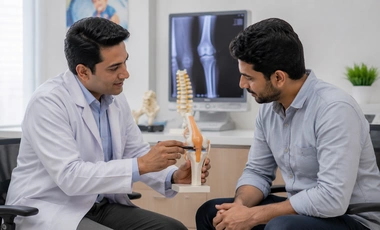
PG Diploma in Orthopaedics
Develop advanced skills in diagnosing, treating, and rehabilitating musculoskeletal disorders, fractures, trauma, and orthopaedic conditions.
Course Overview
Orthopaedics is a branch of medicine that deals with the musculoskeletal system, including bones, joints, ligaments, tendons, and muscles. With increasing cases of trauma (road accidents), sports injuries, degenerative joint diseases, and aging populations—especially in countries like India—the demand for trained orthopaedic professionals is rapidly rising. A 12-month PG Diploma in Orthopaedics is an intensive, clinically oriented program designed for medical graduates. It focuses on diagnosis, emergency management, surgical principles, and rehabilitation of musculoskeletal disorders, combining theory with practical clinical exposure.
What You'll Learn
Understand anatomy, biomechanics, and pathology of the musculoskeletal system
Perform clinical examination and diagnosis of orthopaedic conditions
Manage fractures, trauma, and emergencies effectively
Apply principles of operative and non-operative treatment
Interpret X-rays and imaging techniques
Manage joint diseases, spine disorders, and sports injuries
Provide post-operative care and rehabilitation
Perform basic orthopaedic procedures (casting, splinting, etc.)
Work effectively in trauma centers and orthopaedic units
Requirements
Curriculum
6 Sections · 28 Lessons · 12 Months
01Basic Principles of Orthopaedics5 lessons
- Anatomy of bones, joints, muscles
- Biomechanics of movement
- Bone healing and tissue repair
- Clinical examination methods
- Imaging (X-ray interpretation, basics of CT/MRI)
02Orthopaedic Trauma & Emergencies5 lessons
- Fracture classification and management
- Polytrauma and emergency care
- Dislocations and soft tissue injuries
- Principles of fracture fixation (internal/external)
- Initial stabilization and trauma protocols
03Upper Limb Orthopaedics4 lessons
- Shoulder disorders (dislocation, rotator cuff injury)
- Elbow and forearm injuries
- Wrist and hand conditions (carpal tunnel, fractures)
- Surgical and non-surgical management
04Lower Limb Orthopaedics4 lessons
- Hip fractures and joint diseases
- Knee injuries (ligament tears, meniscus)
- Ankle and foot disorders
- Arthritic conditions and deformities
05Spine & Paediatric Orthopaedics4 lessons
- Spine anatomy and disorders (disc prolapse, trauma)
- Congenital deformities (e.g., clubfoot)
- Pediatric fractures and growth-related disorders
- Non-accidental injuries and pediatric care
06Orthopaedic Diseases & Rehabilitation6 lessons
- Bone infections (osteomyelitis)
- Tumors of bone
- Degenerative diseases (osteoarthritis)
- Sports injuries
- Rehabilitation and physiotherapy
- Prosthetics and orthotics
Instructor

Frequently Asked Questions
Who should pursue the PG Diploma in Orthopaedics?
What topics are included in the PG Diploma in Orthopaedics?
How is the PG Diploma in Orthopaedics delivered?
What career benefits can I expect after completing this diploma?
What is the fee for the PG Diploma in Orthopaedics?
Can this PG Diploma improve professional credibility and earning potential?
Student Reviews