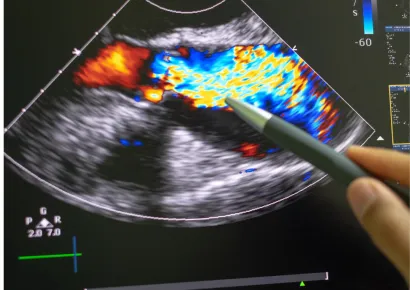
Fellowship in Echocardiography
Fellowship in Echocardiography: Master Cardiac Imaging Techniques for Comprehensive Diagnosis and Patient Care
Course Overview
The Fellowship in Echocardiography offers advanced training in cardiac imaging techniques, focusing on the practical application of echocardiographic modalities in diagnosing and managing cardiovascular diseases. This program is designed for cardiologists and medical professionals who want to enhance their proficiency in echocardiography. Through hands-on training, expert mentorship, and case-based learning, you will gain the skills to perform and interpret echocardiograms for diverse cardiac conditions.
What You'll Learn
Fundamental principles and techniques of transthoracic and transesophageal echocardiography.
Interpretation of 2D, 3D, and Doppler echocardiographic images.
Evaluation of heart valve diseases, cardiomyopathies, congenital heart defects, and other cardiac conditions.
Advanced use of echocardiography in stress testing and intraoperative settings.
Best practices in performing echocardiograms and minimizing patient discomfort.
Effective communication of echocardiographic findings with multidisciplinary healthcare teams.
Requirements
Curriculum
13 Sections · 41 Lessons · 12 Months
01Introduction & Basics3 lessons
- Role and scope of echocardiography
- Cardiac anatomy and physiology relevant to imaging
- Safety, infection control, and ethical considerations in echo labs
02Fundamentals of Ultrasound Physics3 lessons
- Physics of ultrasound and sound propagation
- Image formation, artifacts, and optimization (knobology)
- Transducers and instrumentation
03Echocardiographic Examination Techniques3 lessons
- Patient preparation and positioning
- Standard imaging windows and views (parasternal, apical, subcostal)
- Acquisition of high-quality images and common pitfalls
04Echocardiographic Modalities4 lessons
- M-Mode and 2D Echocardiography
- 3D echocardiography basics
- Tissue harmonic imaging and contrast echo
- Advanced imaging tools and AI-enabled techniques (where available)
05Quantitative Measurements3 lessons
- Chamber dimensions, volumes, and mass
- Calculation of indexed dimensions (BSA/BMI)
- Reference normal values and clinical interpretation
06Doppler Echocardiography3 lessons
- Doppler principles: pulsed-wave, continuous-wave, and color Doppler
- Non-invasive hemodynamic assessments
- Flow measurements and pressure estimations
07Functional Assessment3 lessons
- Evaluation of systolic and diastolic function
- Tissue Doppler imaging
- Strain imaging and myocardial work analysis
08Echo in Cardiac Diseases4 lessons
- Coronary artery disease and ischemia evaluation
- Valvular heart disease assessment (stenosis, regurgitation)
- Cardiomyopathies and pericardial disease
- Adult congenital heart disease
09Stress Echocardiography3 lessons
- Exercise and pharmacologic stress protocols
- Indications and contraindications
- Interpretation and clinical decision-making
10Transesophageal Echocardiography (TEE)3 lessons
- Indications and contraindications
- TEE technique and safety
- Clinical applications (endocarditis, embolic sources, perioperative use)
11Interventional & Advanced Echo3 lessons
- Echo guidance in structural interventions (e.g., TAVR, MitraClip)
- Intra-operative and hybrid procedure echo support
- Left atrial appendage closure guidance
12Clinical Application & Advanced Topics3 lessons
- Echo for acute settings (shock, tamponade, pulmonary hypertension)
- ICU/Emergency echo (FoCUS/POCUS)
- Pediatric and fetal echo basics
13Quality Assurance & Reporting3 lessons
- Echo lab quality control and accreditation standards
- Structured reporting techniques
- Professional practice standards and guidelines
Instructor
Frequently Asked Questions
Who is eligible for a Fellowship in Echocardiography?
What is the duration of a Fellowship in Echocardiography?
Can I do a Fellowship in Echocardiography after MBBS?
What are the career opportunities after a Fellowship in Echocardiography?
What is the fee for a Fellowship in Echocardiography?
What is the salary expectation after a Fellowship in Echocardiography?
Student Reviews